Transitioning a commercial fleet to electric vehicles requires more than just swapping fuel pumps for plugs. Fleet managers must orchestrate dozens or hundreds of charging sessions without triggering catastrophic utility peak demand surcharges.
The Pitfalls of Unmanaged Fleet Charging
When multiple commercial vans or buses plug in simultaneously at the end of a shift, immediate unmanaged power draw can spike peak demand charges, which often account for up to 50% of an industrial commercial electric bill. Without smart orchestration, grid connection limits are quickly breached, requiring expensive transformer upgrades.
Core Pillars of Smart Fleet Charging
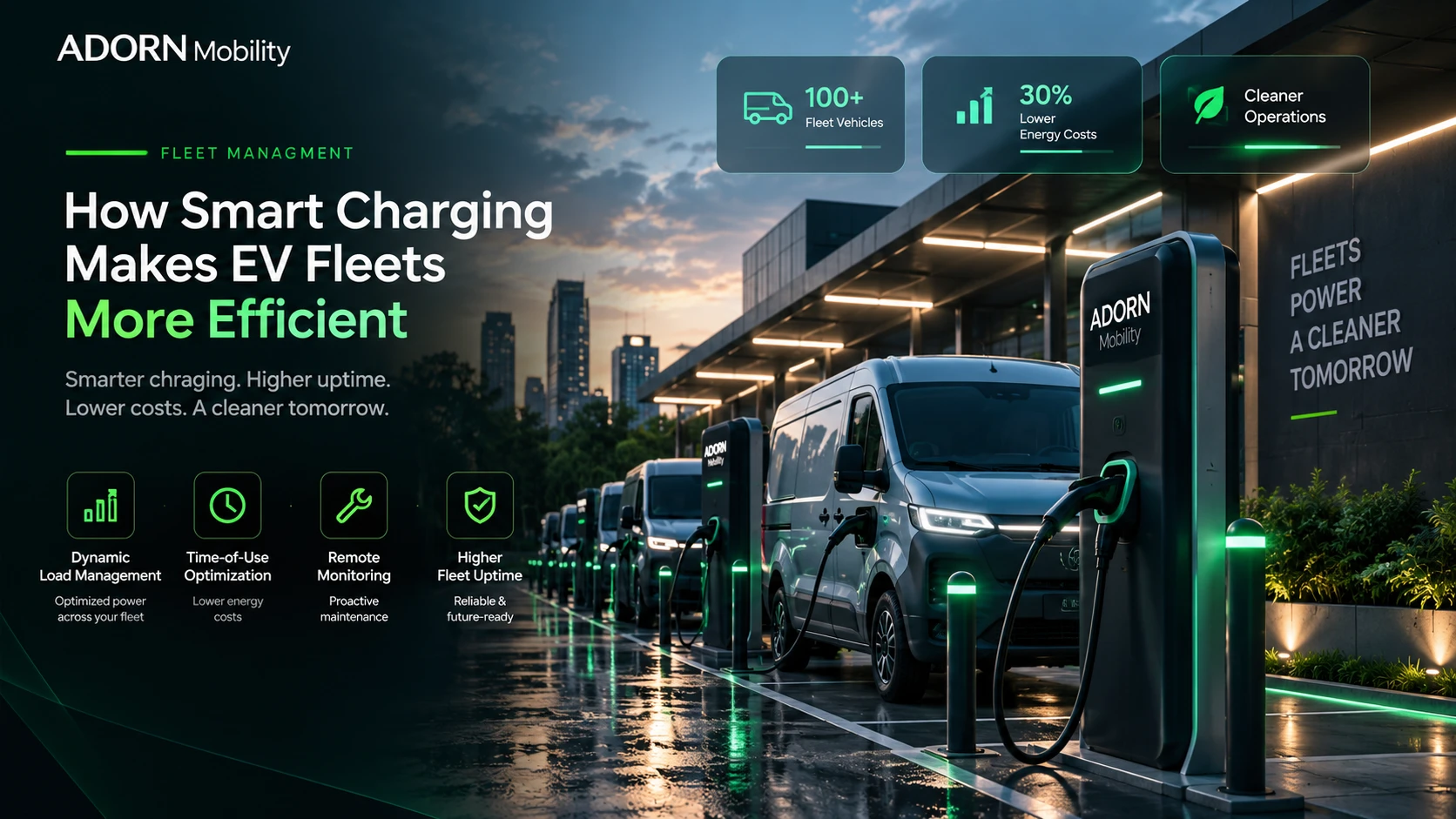
- Dynamic Load Management (DLM): Intelligent software dynamically distributes available grid power across all active charging bays. If the facility is rated for 300 kW, DLM ensures aggregate draw never exceeds this ceiling, automatically dialing down less critical vehicles while prioritizing high-priority routes.
- Time-of-Use (TOU) Optimization: By pre-programming charging schedules to align with overnight off-peak tariff windows, operators reduce total energy costs by 30% to 50%.
- Predictive Maintenance & Remote Telemetry: Connected chargers communicate via standard protocols (like OCPP 2.0.1) to monitor thermal health, ground faults, and connector wear, eliminating depot downtime before morning dispatch.
The Bottom Line
Smart charging transforms the energy footprint of an electric fleet from a chaotic operational bottleneck into a predictable, software-optimized competitive advantage.