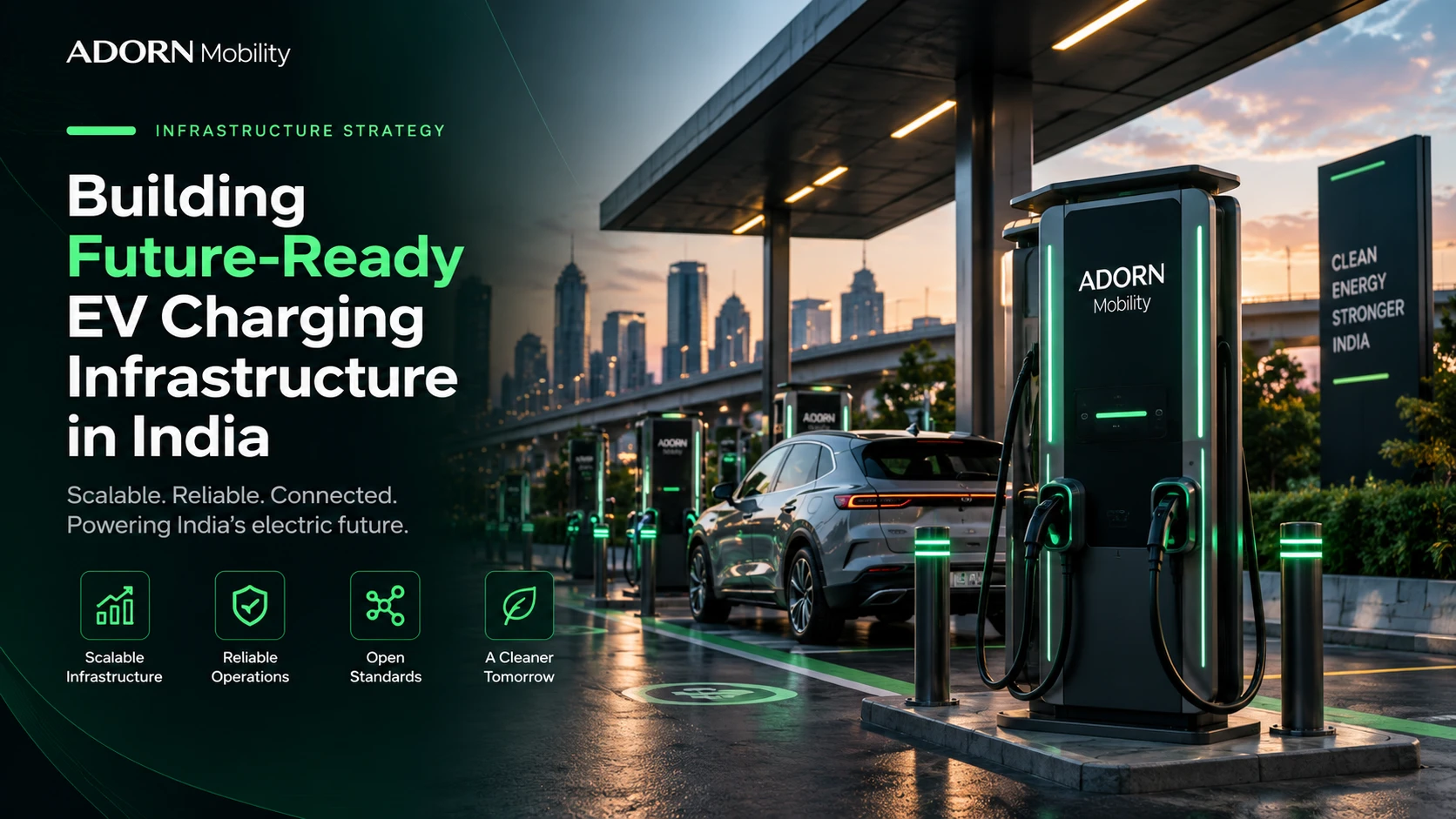
India’s electric mobility ecosystem is accelerating across 2-wheelers, 3-wheelers, passenger vehicles, and commercial logistics. Building charging networks capable of sustaining this rapid adoption requires ruggedized hardware and resilient cloud infrastructure.
Engineering for India’s Operating Environment
Operating EV chargers in tropical and dense urban climates demands specialized hardware specifications:
- Thermal Endurance: Operating temperatures regularly exceed 45°C. Power electronics require advanced cooling topologies and industrial-grade thermal management to prevent premature de-rating.
- Power Quality Tolerances: Wide voltage fluctuations, surges, and occasional ground instability require robust electrical isolation and automated protection relays conforming to national safety guidelines.
- Dust & Moisture Protection: Outdoor charging hubs need IK10 impact protection and IP65 sealing against monsoons and particulate ingress.
Open Protocols & Interoperability
Proprietary closed charging networks fragment the driver experience and limit asset longevity. Future-ready networks adopt open standards such as OCPP (Open Charge Point Protocol) and OCPI (Open Charge Point Interface) to ensure charging stations integrate with national roaming platforms and dynamic billing systems.
Modular Scalability
Rather than deploying fixed-power monolithic hardware, modern infrastructure planning utilizes modular architectures where power sub-modules can be scaled on demand as EV battery voltages migrate from 400V to 800V architectures.