Electric vehicle charging is often described in terms of kilowatts and charging levels, but the fundamental difference between alternating current (AC) and direct current (DC) determines everything from installation costs to battery preservation.
The Fundamental Difference: Where the Conversion Happens
Every EV battery stores energy as Direct Current (DC). The electrical grid, however, supplies Alternating Current (AC). Therefore, conversion must happen somewhere along the line:
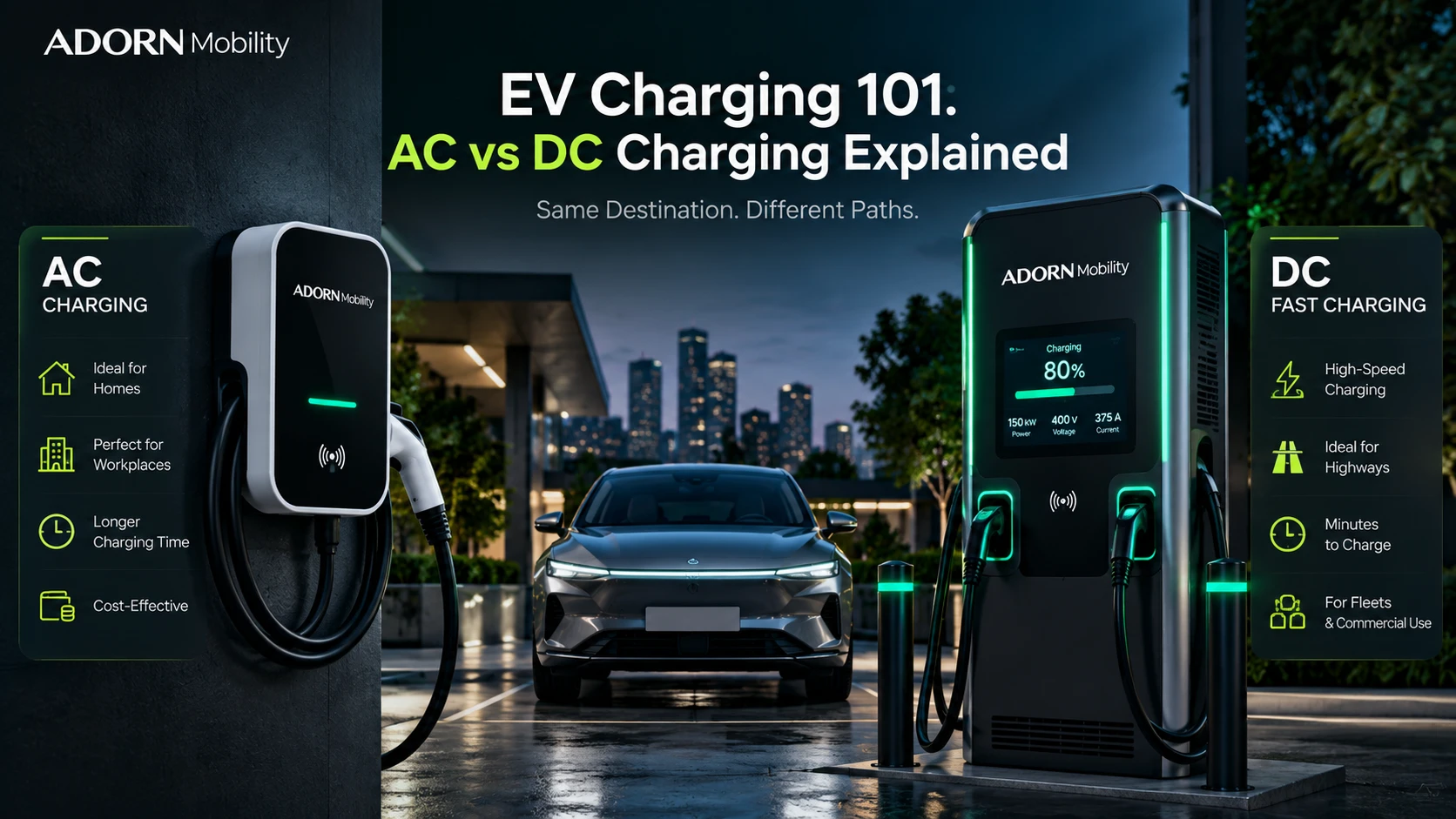
- AC Charging: The EV receives AC electricity directly from the charger. The vehicle’s internal Onboard Charger (OBC) converts that AC power into DC before feeding it to the battery cells. Because onboard converters are constrained by vehicle weight and space, their power capacity is typically limited to 7.4 kW, 11 kW, or 22 kW.
- DC Fast Charging: The conversion happens inside the heavy stationary charging unit itself before electricity reaches the vehicle. This bypasses the onboard charger entirely and supplies high-voltage DC directly to the battery management system (BMS), enabling speeds of 60 kW, 120 kW, 240 kW, or more.
What Really Determines Your Charging Speed?
Charging speed is always governed by the lowest common denominator between three entities:
- The Charger’s Output: A 22 kW AC charger can only deliver 22 kW maximum power.
- The Vehicle’s Acceptance Rate: If an EV has an 11 kW onboard charger, plugging it into a 22 kW AC unit will yield exactly 11 kW charging speed. The vehicle simply cannot accept more.
- The Battery Charging Curve: Lithium-ion batteries cannot accept peak power across the entire state of charge (SOC). As the battery reaches 80%, the internal resistance increases and the BMS intentionally tapers the intake to protect cell chemistry.
Choosing the Right Solution for Your Use Case
AC charging is the most cost-effective solution for overnight home charging, workplaces, and hotel parking where vehicles dwell for four hours or more. DC fast charging is indispensable for highway corridors, fleet hubs with tight turnaround windows, and commercial transit depots.